Blog
Pixel Perfect by Baz - Make designs and implementations match. Every time.
Automated visual review that surfaces missing UI elements and tooltip regressions and maps them to code.
Feb 23, 2026
Omri Levy

Automated visual review that surfaces missing UI elements and tooltip regressions and maps them to code.
Designers and product managers are deeply involved in product delivery today. That is good. The hard part is making their designs actually behave and look the same once they become interactive code. Small gaps add up: spacing drifts, icons move, copy truncates, and interactive states do not match the intended design. These gaps erode trust between design and engineering, slow releases, and increase rework.
Design systems and component libraries like Storybook help. They create conformity, but they need constant maintenance and governance. They break down at scale because teams diverge, tokens drift, and edge cases pile up. Maintaining parity between a living design file and a living codebase is a continuing, expensive effort.
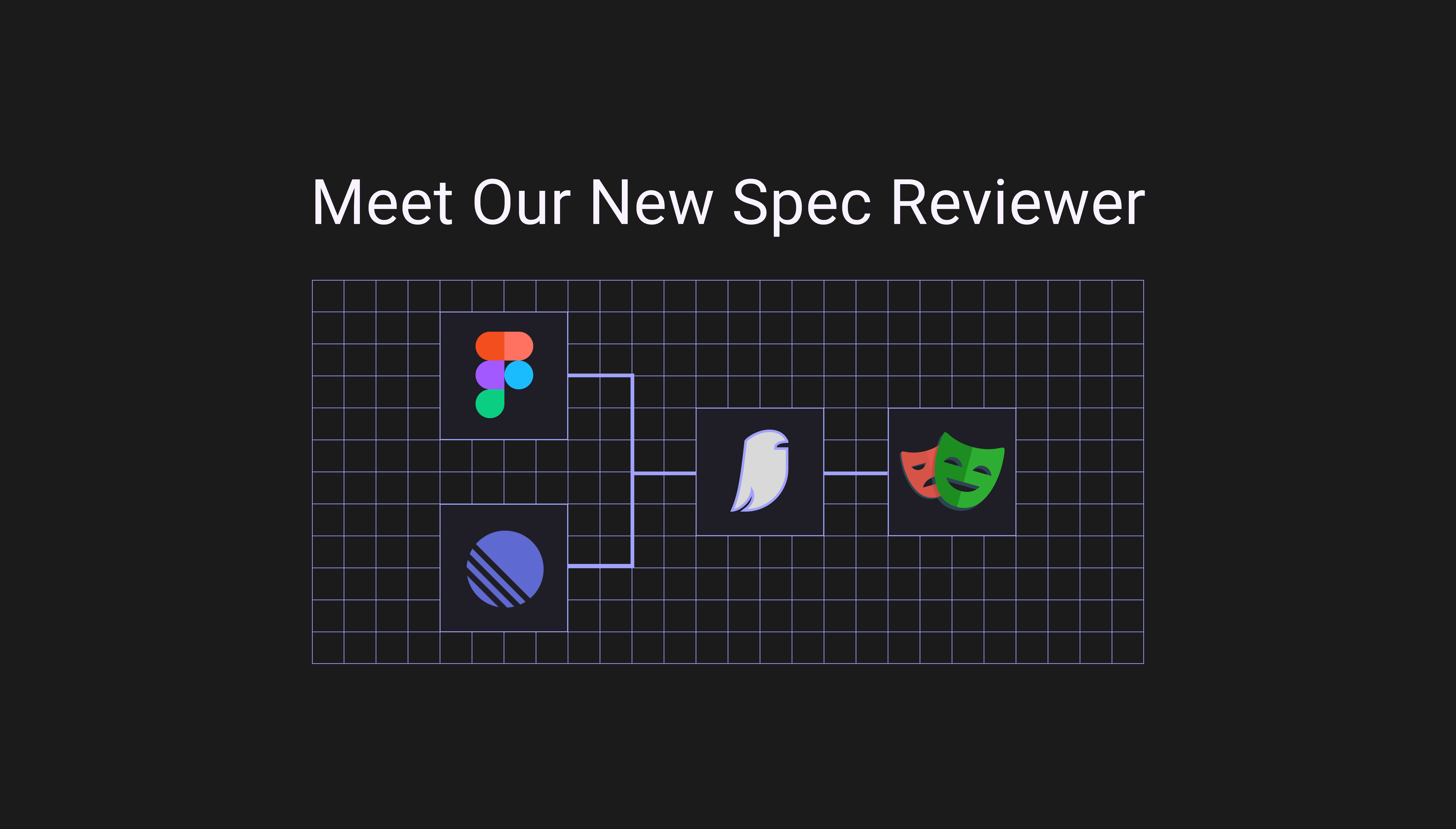
We treat designs as first class, machine-readable specifications and keep the verification where code runs. The flow is simple and practical:
A great human design reviewer works by following a tight, repeatable logic. First they get context, read the intent, and inspect the design as a set of named components. For each component they write one concise acceptance spec that captures structure, key copy, relative spacing and styling intent, and the interactive states that matter. The goal is a single, testable sentence of design intent per component.
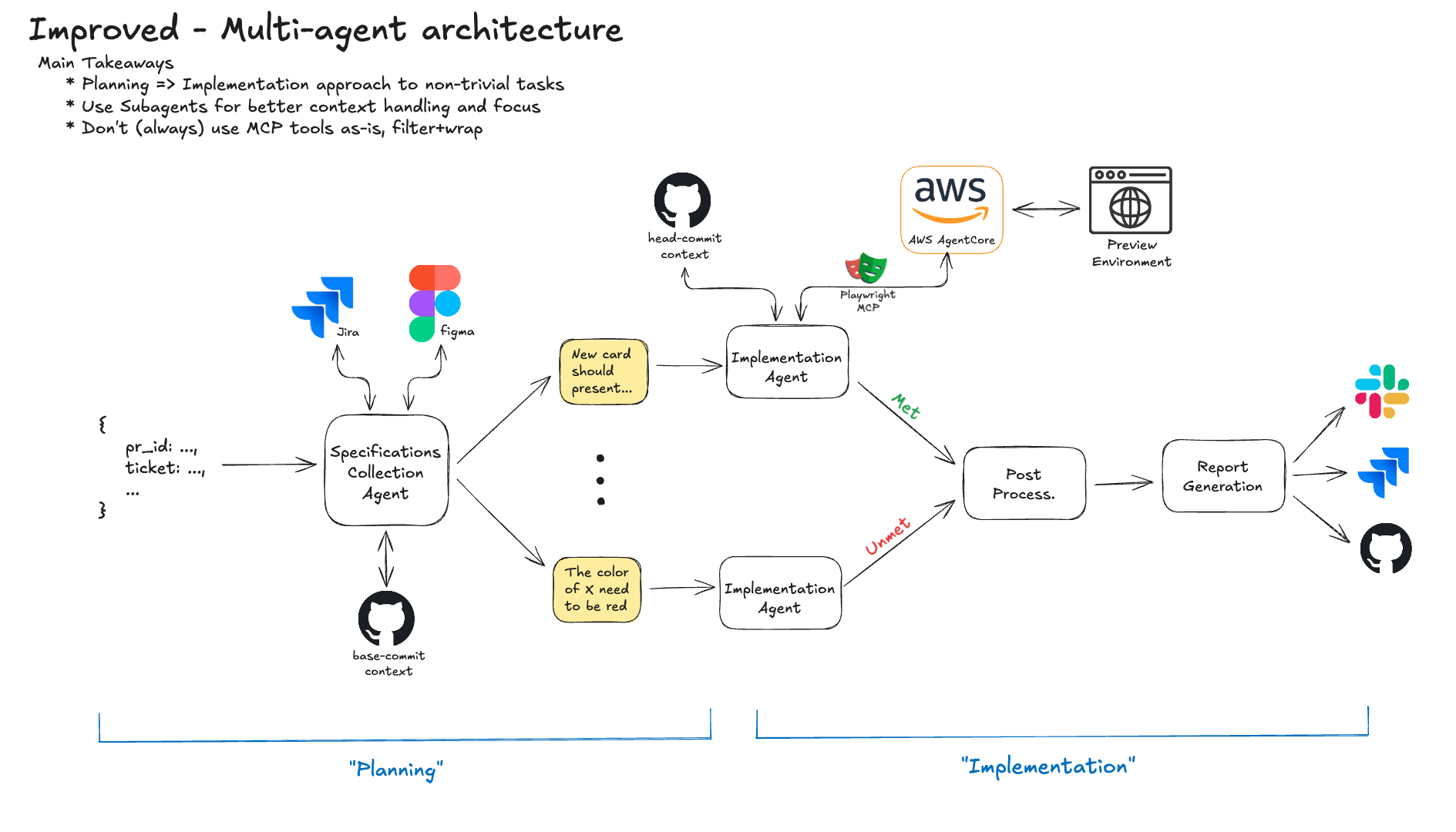
Next they exercise the implementation like a user. They navigate, interact, and gather two kinds of evidence: a structural snapshot that exposes the DOM and refs for interaction, and visual screenshots that show spacing, proportion and styling. They compare the evidence to the component spec, mark the exact visual failures, and capture concrete proof for each failure.
A top reviewer then traces each failure to cause. They map the observed UI element back to the place in the code that renders it, decide if the fix belongs in the component library, the page, or the design tokens, and describe the minimal remediation that preserves intent. Finally they package findings into a short report that includes the spec, the UI evidence, the code locus, and a recommended fix.
Baz reproduces that exact logical flow in automation. Specification extraction, focused per-component validation, evidence-first checks, explainable mapping from UI to code, and a short remediation recommendation. The result is the same crisp output a senior reviewer would produce, at scale and in parallel, ready for the next step of proposing or applying the fix.
Baz code reviews stop at nothing short of traceable conclusions. When a visual requirement is not met, Baz points to the exact place in the implementation surface and the exact place in the code that caused the mismatch. Reports include the design, the UI evidence, and a clear explanation of what is off and why. That removes guesswork from design review and shortens the path to a fix.
Pixel Perfect turns the subjective visual review into objective with traceable evidence: it codifies component-level intent from Figma, compares it against live UI snapshots, and points to the exact code locus responsible for any visual mismatch. By removing ambiguity and supplying screenshots plus precise code references, it replaces manual back-and-forth with a single actionable report, speeding fixes, restoring trust between design and engineering, and letting teams ship polished interfaces at scale.
.png)
Pixel Perfect is the verification step. The next step is closing the loop. We are building a Baz agent that will not only find the mismatch but will propose and, when you want it to, complete the coding loop by producing the minimal, safe change to bring the implementation into alignment with the design.